Where does time go? I was in Michigan weekend before last and it's already the 19th. Of course I lost a week when I got back - I promptly caught a cold and slept off several days in bed. No knitting. Not the time of year to be sick, is it?
I attended a Habu Trunk show at
Woven Art while I was there. Man what a show! It consisted primarily of the garments designed and knit by Setsuko Torii found in
Setsuko Torii Hand-Knit Works.ETA: The Japanese-language book is still available at Yesasia.com and Amazon Japan. There is no English-language version and no plans to publish one at the moment. I have it from a good source that only 2000 books printed.

Most of the garments are now available in kits from
Habu Textiles. The pix I took don't do the garments justice - they are truly breath-taking individual works of art and innovation. I spent the first hour looking and staring - awestruck really. I was on sensory overload. Then I finally started trying things on, much later remembering to take pictures. My first impression years ago of most clothing made with Habu yarn was that they were best suited for smaller frames, but after watching everyone try them on, it quickly became apparent that practically every piece flatters every figure and every age. They are classic and timeless.
I can't choose a favorite. I loved some aspect of each piece: the careful color gradation knit into a jacket; the simple buttonholes created by enlarging and binding the opening of a stitch; the drapiness of the hand of knitted stainless steel or paper, or both together; unusual color combinations that would never have occured to me but really work; the innovation of a sideways knit making a deceptively simple jacket; or the rustling (a whisper) of a paper linen and stainless steel jacket when it moves. Design and concepts so simple in some cases that you wonder why you didn't think of it yourself.
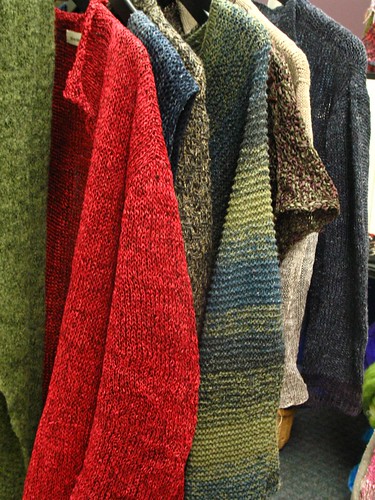
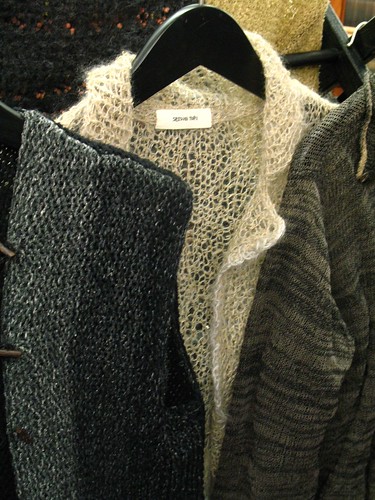
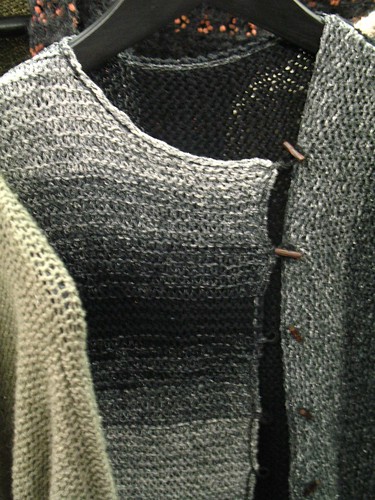
The color gradation is created knitting different shades solid gray yarn at certain intervals. The yarn is not variegated.
It was hard to choose a kit to buy. I finally settled on a new Torii design created after the book was published: a short wrap jacket with a shawl collar knit from DK wool and 2 tiny strands of ramie, and a white-on-white Kusha Kusha scarf.
I loved this cotton and stainless jacket.

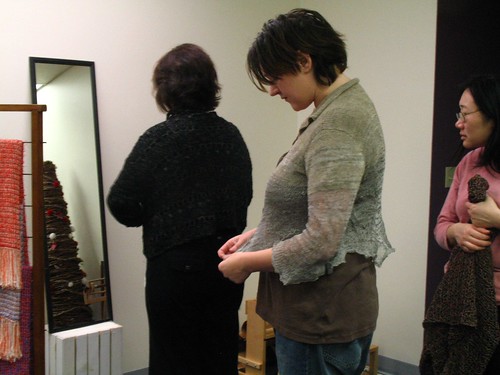
The top half is made of cotton and stainless steel knit together. The cotton gives the jacket shape and form. The bottom half is knit with two strands of stainless steel, one off-white and one gray, giving the impression of modern, ultra-lightweight and airy chain mail. It floats in the back.
The "Washi and Tsumugi" coat flattered everyone who tried it on. It doesn't hang in a boxy way, instead it skims the contours of the body. Everyone loved it.
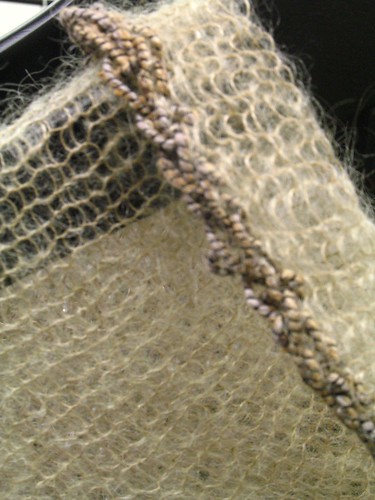
A mohair pullover edged with heavier tsumugi combination silk gives the garment weight and drape unimaginable in mohair.
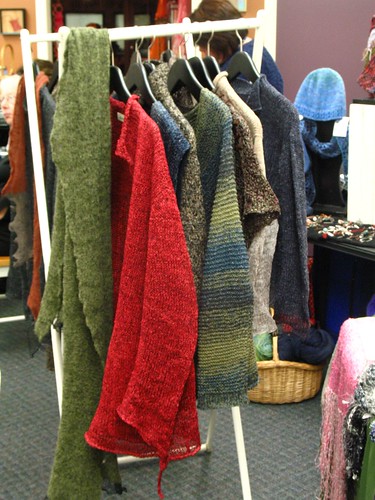
The red jacket in the foreground had knotted "shippo tails" on the sleeves making it much more than just a simple jacket. We were all surprised that it had hidden pockets!
It is made of shosenshi paper and stainless steel, and rustles gently when you move in it.
This lovely Chinese Style Pullover is knit with two strands of shosenshi paper yarn in purple and khaki (actually green).
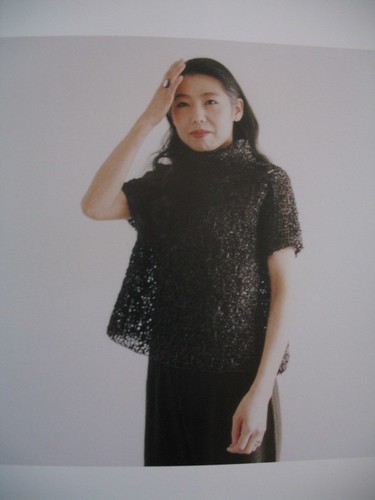
Photo from Hand-Work Knits.
The most astounding piece, for me at least, was the shippo tail tank.
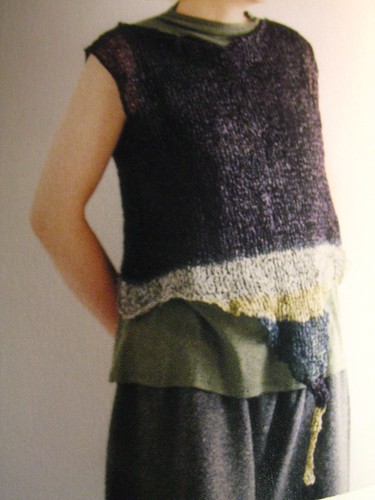
Photo from Hand-Work Knits.
The MC is purple paper linen, followed by gray, chartreuse, blue/grey I think, then chartreuse, tipped with a bit of gray again. The chartreuse was beautiful with the gray and purple. It's brighter than it appears in the photo, providing a brilliant contrast to the purple. I'd like to make this eventually, but will modify the tail somehow, perhaps placing it elsewhere and modifying the length.
Takako Ukei, owner of Habu, gave an interesting talk about the development of Habu yarn Friday night, and three hour-long classes on reading Japanese charts Saturday morning. Each class was packed. Takako was delightful. She has a wonderful sense of humor and a boatload of patience.
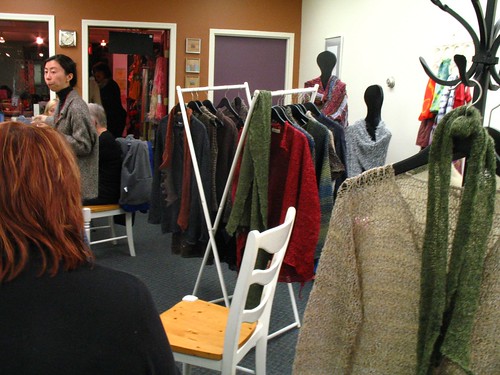
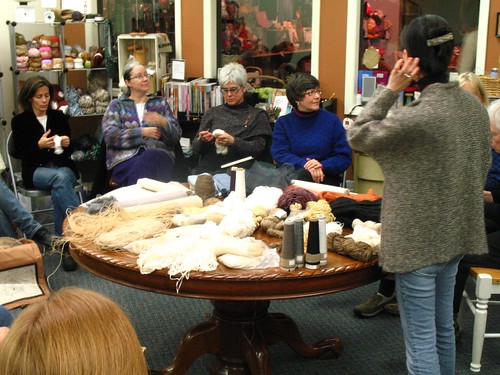
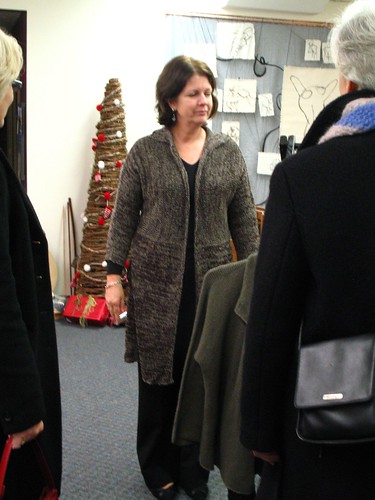
Takako is wearing a sideways knit cardi. She had a pattern for it, so it is probably available as a kit too.
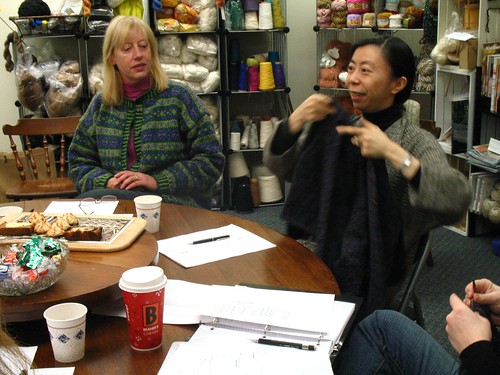

The pattern reading class was an enormously useful and gave me the chance to ask questions about some of the patterns in the book.
There are more pictures
here.
Woven Art was an excellent venue for the show and the class. There was plenty of room to display the collection and try things on. The table was just the right size for the class (and the lazy susan in the center was perfect for treats!) Nancy's shop is the kind of place where knitters just go to hang, have a cup of coffee and knit (or weave. or spin.) as I would do if I lived in Lansing or East Lansing. Nancy is a wonderful host and the knitters there are warm, friendly people with whom I felt immediately at home. (I'll see you guys again soon!)
Why oh why doesn't someone in the Washington Metro area host a Habu trunk show? I would happily attend again.


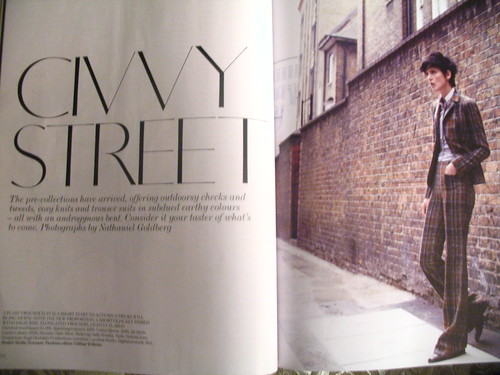
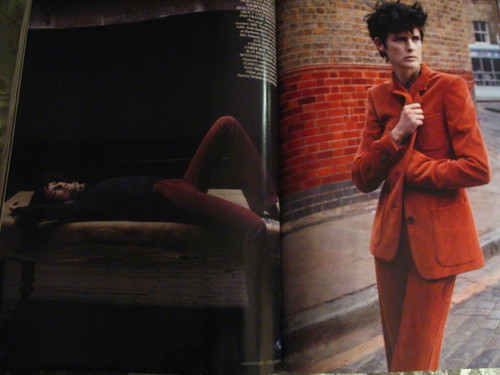
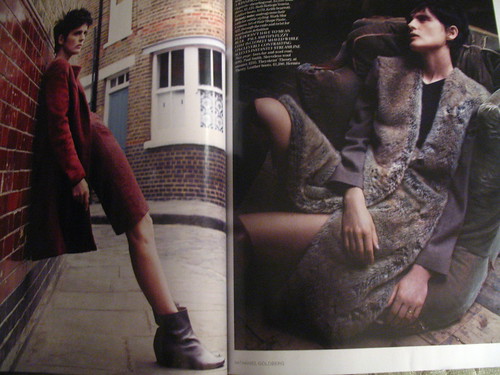
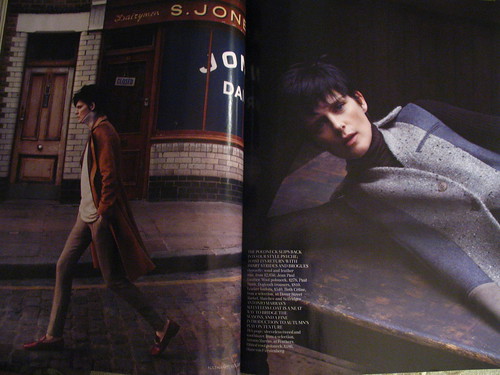
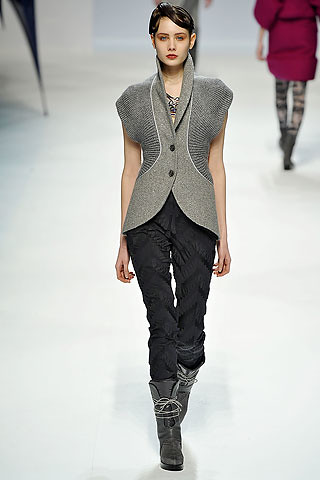
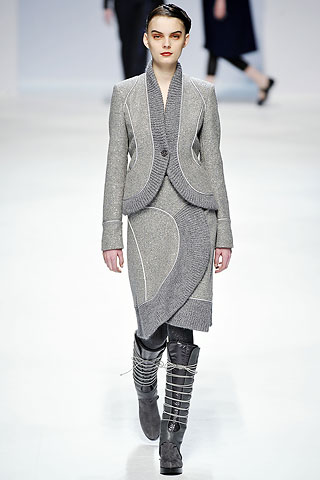
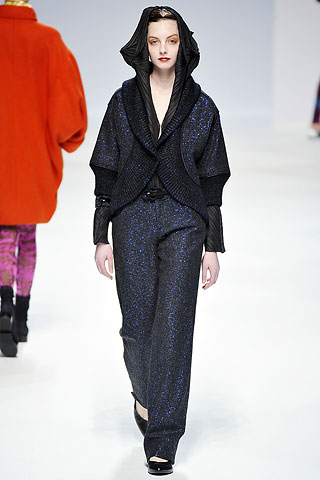
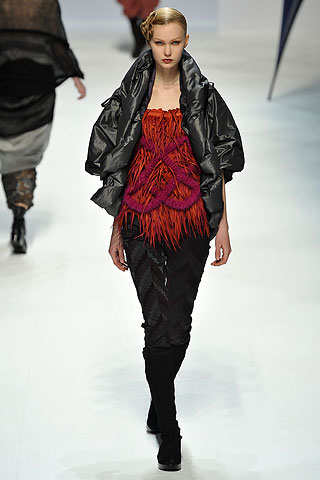
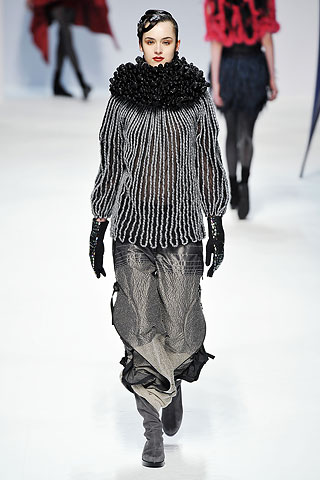
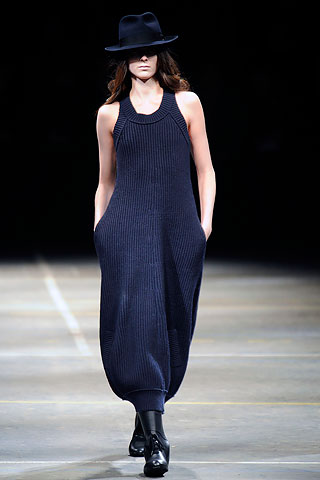
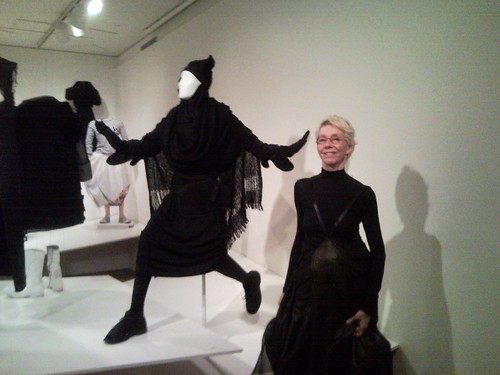
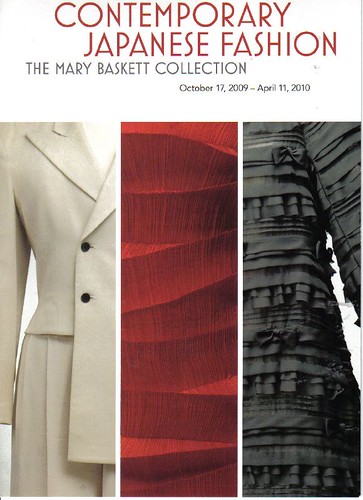
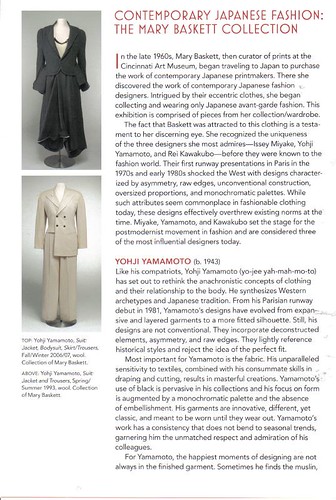
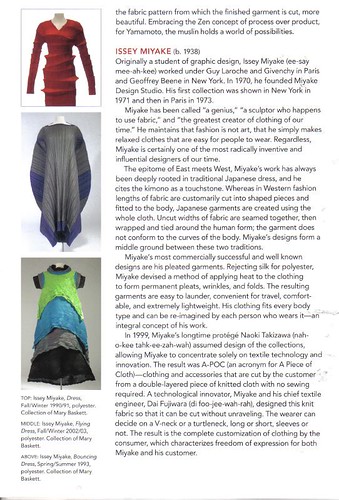
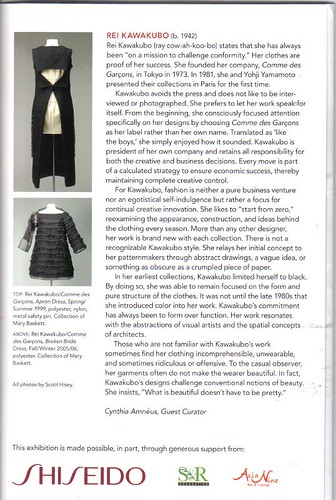



 Westwood's Anglomania collection will be on display too.
 Harper's Bazaar, July 2007
 Vogue, August 2007
 It's really hard to take pix of opera length mitts on your own arm.
 Not much comment about the Monkey socks either. I like them, but don't feel the love like everyone else. I used Sundara "Gray over Periwinkle."


 Posts
Posts